For restaurants
Your true food cost, weekly.
Upload the invoices you already receive. PlateCost extracts every line, re-costs every plate the night a price moves, and shows you which four items are doing the damage.
Setup in 15 minutes · Works with any vendor · No POS required
Dashboard
2026-08-08 to 2026-09-07
Purchases, last 30 days
$84,120
Approved invoices
218
Waiting for review
4
Food cost
31.4%
Top products by spend
| Product | Vendor | Spend | 30-day change |
|---|---|---|---|
| Ribeye, choice, 12 oz | US Foods | $9,412 | +6.2% |
| Butter, unsalted, 36 lb | Sysco | $4,880 | +11.4% |
| Chicken breast, boneless | Ben E. Keith | $4,105 | −2.1% |
| Heavy cream, 12 qt | Sysco | $2,644 | +3.8% |
| Russet potato, 50 lb | US Foods | $1,930 | 0.0% |
01 — The problem
Four ways a kitchen loses money quietly
None of these look like an emergency on the day they happen. That is exactly why they compound — by the time food cost shows up on the P&L, the invoices that caused it are four weeks old.
- The invoices nobody enters
- Two hundred documents a month is roughly nine hours of typing. It gets done in bursts, in arrears, by whoever is least busy — which is how a month closes on numbers that are three weeks stale.
- The increases nobody sees
- Vendors move prices a line at a time. Butter went up eleven percent at The Lakehouse over four months and no single invoice looked wrong on the day it arrived.
- The plates priced on a guess
- A menu costed eighteen months ago is fiction. Four Lakehouse plates were selling below the cost of making them before anyone ran the arithmetic.
- The supplier nobody checks
- Pack sizes differ, so the quote sheet and the invoice are not comparable without doing the per-unit maths. Almost nobody does the per-unit maths.
02 — Proof
What one reprice was worth
PlateCost read eleven months of The Lakehouse's invoices in an afternoon. The reprice that followed was not clever — it was arithmetic nobody previously had the data to do.
- Annualised margin saved in the first menu reprice
- $177KAnnualised margin saved in the first menu reprice
- Food cost on the repriced plates, one quarter later
- 31.4% → 28.0%Food cost on the repriced plates, one quarter later
- Invoices extracted without anyone typing a line
- 218 / moInvoices extracted without anyone typing a line
Every Monday, your week explained in one email
What you spent, what moved, and the one thing worth doing about it before the week starts. You do not have to open the app to find out.
Chicken breast is up 9% at Sysco
Your week: $8,660 across 12 invoices, food cost 31.4%.
$8,660
Spent this week
12
Invoices processed
4
Awaiting review
31.4%
Food cost vs 30%
Food cost by week
Spend by vendor, this week vs last
Biggest price moves
- Brisket, whole packerSysco$4.19+11.0%
- Chicken breast, bonelessSysco$3.42+9.0%
- Nitrile gloves, LUS Foods$18.40−8.6%
- Cheddar, yellow blockBen E. Keith$3.05+6.4%
What to do about it
Brisket is up 11% at Sysco
$4.19/lb, from $3.77 three weeks ago. Your brisket plate is now 34% food cost.
Reprice the brisket plate →
Actual invoice from one of The Lakehouse’s vendors. Five line items, one hand-circled total, extracted in under a minute. Click to enlarge.
We read the invoices nobody else can.
Handwritten, photographed on a clipboard, forwarded by email, wired over EDI. If your vendor sends it, PlateCost reads it.
Snap a photo on your phone
The moment the driver hands you the ticket. Clipboard, warehouse light, coffee stains — we handle it.
Drop a PDF at your desk
Upload a batch at the end of the day. Every line item extracted and matched to your recipes in under a minute.
Forward the vendor email
Vendor portals send PDFs on autopilot. Forward them to your ingest address and we take it from there.
EDI or direct integration
For the distributors that want zero-touch. We wire into the feed and your invoices flow in automatically.
03 — How it works
Invoice to plate cost, in three moves
You can finish the first step from your phone while the delivery is still on the dock.
Step 1
Send the invoice
PDF, photograph or forwarded email. Vendor, product, pack size, quantity and price come out; anything uncertain is flagged rather than guessed.
app.platecost.io/documents/new Drop invoices here
PDF, JPEG or HEIC — or forward them to invoices@your-org.platecost.io
sysco-2026-09-02.pdf62 of 62 linesusfoods-2026-09-04.pdfextracting…Step 2
Build a recipe once
Attach items to a plate with real quantities. Every future price change re-costs it automatically, including through sub-recipes.
app.platecost.io/recipes/ribeye-plate Ribeye plate
Menu price $42.00
Ribeye, choice, 12 oz 12 oz $9.84 Compound butter 1.5 oz $0.41 Russet potato 8 oz $0.38 Asparagus 5 oz $1.12 Plate cost $11.75 Food cost28.0% — target 30%Step 3
Act on what moved
See who else quoted the item and what the gap is worth over a month of your own ordering volume.
app.platecost.io/items/butter-unsalted-36lb Butter, unsalted, 36 lb — price per lb
Sysco current supplier $1.06 Ben E. Keith best price $0.94 US Foods order guide, Aug $1.11 At 640 lb a month, switching this one line saves $921 a year.
04 — Extraction
Every line, including the ugly ones
Fuel surcharges, case-break credits, split cases and the second page nobody scans. Documents land in a review queue next to the original, so a bad read is a question rather than a silently wrong number in next month's report.
- Duplicate detection — the same invoice sent twice does not double your spend
- Line items matched to your catalog, with near-misses offered for one-click confirmation
- Approval is explicit: nothing reaches your costs unreviewed
- The original document stays attached, forever, next to the rows it produced
- sysco-2026-09-02.pdf62 linesApproved
- usfoods-2026-09-04.pdf41 linesNeeds review
- benekeith-2026-09-05.pdfextracting…Processing
05 — Costing
Recipes that re-cost themselves
A plate cost is only true on the day it was calculated. PlateCost recalculates on every price change, keeps the history, and bands the result against your target per plate rather than as one number for the menu.
- Sub-recipes: cost a compound butter once, use it in six plates
- Yield and waste factors, so a case price becomes an honest per-portion cost
- Banding at 28% and 35% — the same thresholds the app uses everywhere
- Sales mix from Toast, when connected, to weight the plates that actually sell
| Plate | Against 30% target | Food cost |
|---|---|---|
| Ribeye plate | 28.0% | |
| Shrimp & grits | 33.6% | |
| Smash burger | 26.4% | |
| Lobster roll | 41.2% | |
| Caesar, half | 19.8% |
06 — Vendors
The same case, priced by everyone who sells it
Upload order guides and the comparison is per unit, corrected for pack size — which is where most of the savings in a rep's quote sheet quietly disappear.
- Price-increase alerts the week they happen, not at month end
- Annualised value of a switch, computed from your own order volume
- Quoted prices and billed prices reconciled against each other
- Order guides from every supplier in one comparison, not four PDFs
Butter, unsalted — price per lb
+15.2% since April
Six increases, none of which looked wrong on the invoice that carried it.
07 — Agents
Your assistant can read the books
PlateCost speaks MCP. Point Claude, Cursor, or your own agent at the server with a token you mint in Settings, and it can pull invoices, price history, recipe costs and the food cost report the same way the app does — scoped to one organization, with writes gated by the token's permissions.
Every MCP tool is also a plain HTTP endpoint under /api/v1, described by a generated OpenAPI document, so the two doors cannot drift apart.
claude mcp add --transport http platecost https://app.platecost.io/api/mcp \
  --header "Authorization: Bearer pc_…"
Then, in the chat:
“Which five items moved the most this month, and what does that do to the ribeye plate?”
It answers from your invoices — not from an export you remembered to make.
“If you don’t operate on true data you are a leaf on the wind.”
Michael Lucas / The Lakehouse

I did the crazy thing.
I bought a restaurant. Everyone told me it was a terrible investment. I did it anyway — for the community, a 60-year-old building, the friends who helped get it done. When you decide to invest in something, you do it with love.
Our best-selling dish was losing us money.
Three fillets of Pacific cod, house-made tartar, almost half of our sales. It was running at 54% food cost. The tools designed for 100-location chains — MarginEdge, xtraCHEF — took three to five months just to onboard us. The P&L I inherited reflected what every honest operator eventually discovers: menu prices had drifted out of alignment with invoice prices, and nobody had a tool for a restaurant our size.
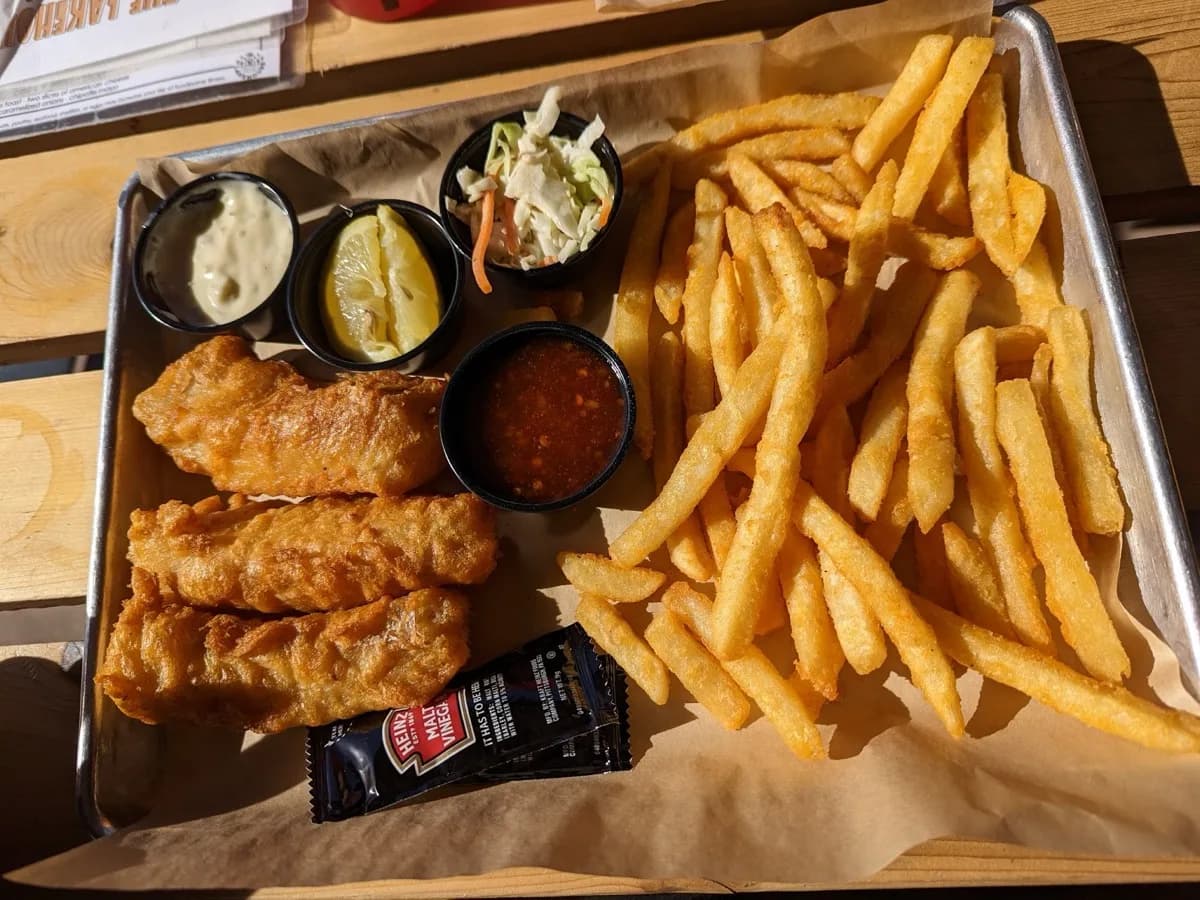
I raised the price 40%. Sales went up.
The data said to raise it. Every instinct said we'd lose the regulars. The data was right. I kept the cod, added house-made hush puppies, and revenue went up, not down. Ran the same play on High Noon seltzers. Same result. Real data is what lets you price with confidence — so you can get back to what makes this industry fun.

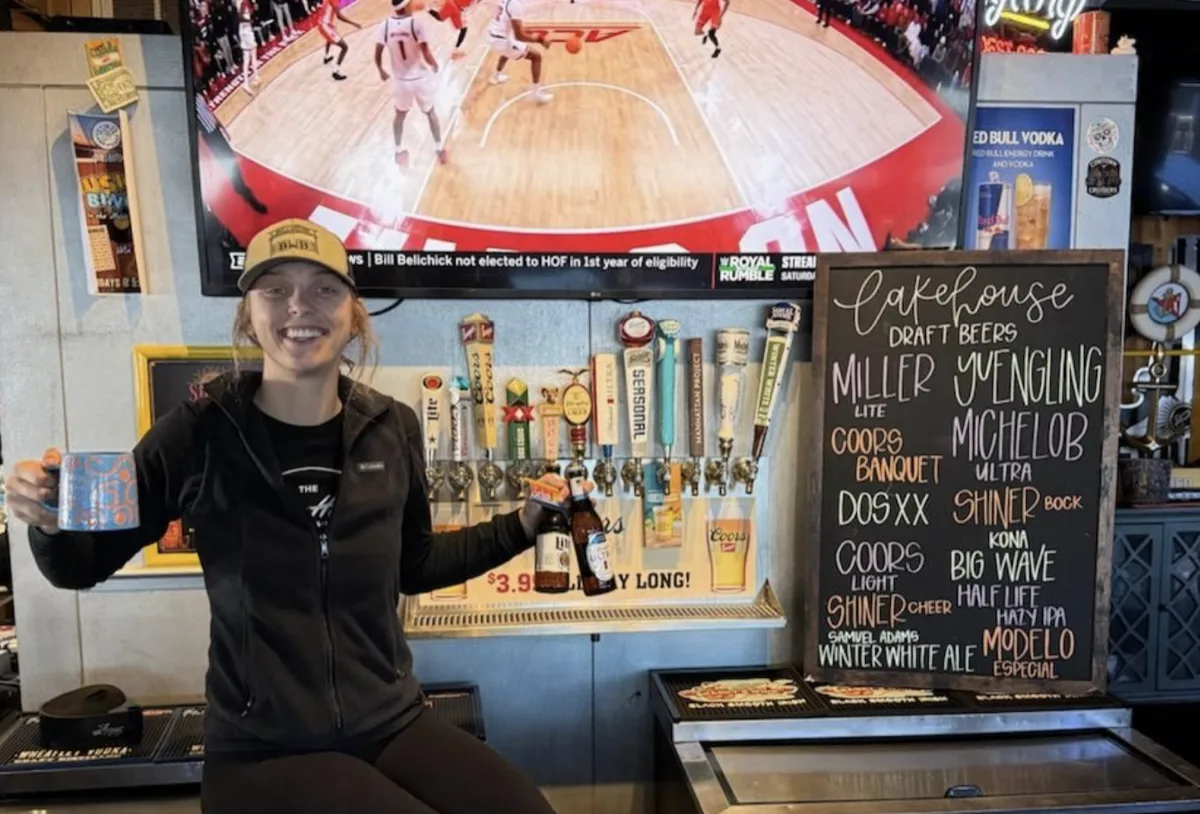
So you don't learn as hard as I did.
I built PlateCost for operators like me — one to five locations, no dedicated pricing team, getting squeezed from both sides. Fifteen-minute onboarding. Action-oriented. Works for you, not for a back office you don't have. The yellow brick road I wish I'd had.
08 — What you are trusting us with
Purchase history is the most sensitive thing a restaurant owns
So the isolation is enforced by the database and checked by the build, rather than promised on a marketing page.
- No POS required
- Everything works off invoices you already receive. Connect Toast if you want food cost as a percentage of sales; skip it and nothing else changes.
- Any vendor, any format
- Sysco, US Foods, Gordon, Ben E. Keith and the produce guy who still faxes. Extraction reads the document rather than a per-vendor integration.
- Multi-location on one bill
- Locations are rooms inside one organization: one login, one report, one price. Adding the third restaurant does not change the invoice.
- Isolated by the database
- Row-level security keyed to your organization, private S3 storage with signed reads, and nothing sold, pooled or shown to your vendors.
09 — Pricing
One plan, every location
Per-site pricing is why multi-unit operators end up back in a spreadsheet. One number, and it does not change when you open the second room.
$149/mo per organization
- AI invoice extraction — upload a PDF, get every line item
- Real-time recipe and plate costing
- Multi-vendor price comparison and savings alerts
- Food cost report with COGS trend by location
- Unlimited locations, users and recipes
10 — Questions
Asked on nearly every call
How long does setup take?
About fifteen minutes: create the organization, upload one invoice, confirm the handful of items it could not match to a catalog you do not have yet. Costing is useful from the first document.
Do I need to change my POS?
No. Invoices carry the cost side, which is the half nobody has. Toast is an optional connection that adds sales mix and food cost percentage on top.
What if the extraction gets a line wrong?
You see it. Every document lands in a review queue beside its original, low-confidence fields are flagged, and nothing enters your costs until it is approved.
Can I get my data out?
Every table exports as CSV from inside the app, and the same data is available over the REST API and the MCP server with a token you control.
How is this different from MarginEdge?
One flat rate for the whole group instead of a fee per location, fifteen minutes instead of a ninety-day implementation, no contract, and an API your own tools can read.
What happens after the trial?
Nothing is charged and nothing is deleted. The account goes read-only until you subscribe, and unused trial days carry into the subscription.
Start with one invoice
Upload a single PDF. Inside a minute you will know whether the numbers justify the rest of the afternoon.
14-day free trial · No contracts · Cancel anytime